How much material a making project actually eats
The mould says it holds sixty grams. The pour needs ninety. This is where the difference goes, and how to buy for the project rather than for the piece.
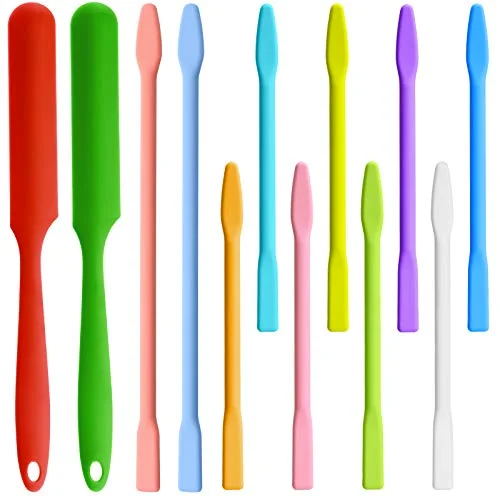
- Tools and consumables are different purchases
- The waste factor nobody budgets for
- Estimating a resin project properly
- Bath bombs, candles, and the batch size trap
- The covering problem, and why it is a consumable
- Findings: buy for the failure rate, not the piece count
- Where food contact enters a craft project
- Restocking rather than re-buying
Every maker has the same evening in their history. Half past nine, a project two thirds finished, and a realisation that there is not enough of something to complete it. Not enough resin, not enough of one colour, not enough of the small metal part that seemed like a detail when the shopping list was written.
The material is never the expensive part of that evening. The expensive part is that the work stops, and a half finished pour does not wait politely for a delivery. This piece is about estimating quantities properly before starting, and about the difference between the material a piece contains and the material a project consumes.
Tools and consumables are different purchases
Craft supplies split cleanly in two, and confusing them is the root of most bad buying decisions in this area.
A tool is bought once and kept. A good pair of flush cutters, a heat gun, a set of moulds. The right approach is to buy one decent one rather than three cheap ones, and the pack size question does not arise.
A consumable is eaten by the project. Resin, stir sticks, mixing cups, gloves, sandpaper, jump rings, release paper. Here the pack size question is the whole question, because running out is the specific failure that stops work.
Almost everything we make for makers is in the second group. That is deliberate: the tools are a personal choice and a long term one, while the consumables are a supply problem, and a supply problem is what a multipack solves.
Nobody has ever abandoned a project because their stir stick was mediocre. Plenty have abandoned one because there were no stir sticks left.
A maker who buys them a dozen at a time
The waste factor nobody budgets for
The single most useful number in project planning is not the volume of the piece. It is the ratio between what ends up in the finished object and what leaves the cupboard, and for most making processes that ratio is much worse than people assume.
Resin is the clearest example, because the losses are visible and measurable. Material stays on the walls of the mixing cup. Material stays on the stir stick. Material is lost to the pour itself, because you cannot fill a mould exactly to the brim without overfilling it slightly. And a proportion of every batch is lost to bubbles that force a top up.
| Where it goes | Typical share | Can you reduce it |
|---|---|---|
| Into the finished piece | About 70 per cent | That is the target |
| Left in the mixing cup | 10 to 15 per cent | Yes, with a smaller cup and a scraper |
| On the stir stick and tools | 3 to 5 per cent | A little, with flat sticks rather than round |
| Overfill and spill | 5 per cent | Yes, with practice |
| Top ups after bubbles | 5 to 10 per cent | Partly, by degassing and warming |
Which gives the rule of thumb we use when anybody asks: mix a third more than the volume of the piece. Not ten per cent, not double. A third. That figure has been right often enough that it is the number we give on the phone.
Estimating a resin project properly
Work in three steps, and do all three before mixing anything.
- Measure the mould volume. Fill it with water, pour the water into a measuring cup, note the millilitres. Every mould you own is worth doing this to once, with the answer written on the mould in marker.
- Multiply by the number of pieces. This is the volume that ends up as objects.
- Add a third. That is the volume to mix, and it accounts for the cup, the stick, the overfill and the top ups in the table above.
For a set of six coasters at roughly ninety millilitres each, that is five hundred and forty millilitres of finished work and about seven hundred and twenty to mix. If your resin comes in a kit that yields six hundred, you are one pour short of six coasters, and you will find that out at the fifth one.
Bath bombs, candles, and the batch size trap
Processes that involve a chemical or thermal reaction have a different failure mode, and it is worth naming because it catches people who have already learned the resin lesson.
With bath bombs, the mixture has a working window. Once the wet ingredients are in, the mix begins to react and firm up, and a batch larger than you can press within that window is a batch that half succeeds. Doubling the recipe does not double the output; it produces a good first half and a crumbly second half.
Candles have the opposite constraint: the wax is easy to keep workable, but every pour has to happen at a temperature window, and a large batch cools while you work through it. The answer in both cases is the same. Work out how many you can physically handle in the window, and let that set the batch, not the size of the pot.
| Process | The limit | How to size a batch |
|---|---|---|
| Resin pour | Pot life once mixed | One batch per colour, mixed with a third spare |
| Bath bombs | Working window after wetting | What you can press in about ten minutes |
| Candles | Pour temperature window | What you can pour before the wax drops out of range |
| Air dry clay | Surface drying | What you can shape in one sitting |
| Diamond painting | Nothing, it pauses cleanly | Any size, provided the surface stays covered |
The covering problem, and why it is a consumable
Diamond painting is the outlier in this piece because the work pauses cleanly. You can stop mid canvas for a month and come back to it, provided one thing is true: the adhesive underneath is still covered.
The original release film that comes with a canvas is designed to be peeled back a section at a time, and it stops sticking after a few cycles. Once it stops sticking, the exposed adhesive collects dust and hair, and the drills stop seating properly. From that point the canvas is fighting you.
Which turns release paper from an accessory into a consumable, and one worth having a stack of rather than a sheet. It is a small thing and it is the difference between a canvas that gets finished and one that gets abandoned at sixty per cent.
Findings: buy for the failure rate, not the piece count
Jump rings, clasps, keyring loops and the rest of the small metal parts are the other category where quantity planning goes wrong, and for a different reason. The piece count is easy to work out and the failure rate is not.
A jump ring is opened and closed with pliers, and a proportion of them will be over opened, distorted, or dropped and never seen again. On a first project that proportion can be one in three. It falls with practice and it never reaches zero, because dropping a four millimetre ring onto a wooden floor is a permanent event.
So the rule for findings is to buy at least twice the piece count for a first project and a half again after that. At the prices these come in, the difference between a hundred and two hundred is trivial and the difference between having enough and not is an evening.

Where food contact enters a craft project
One area needs care rather than arithmetic, and it comes up constantly in making: the moment a project that started as decoration turns into something that touches food.
A resin coaster does not touch food. A resin tray that a cheeseboard sits on does not touch food either. A resin bowl does, and so does anything with a food surface poured into it, and at that point the question stops being about craft technique and becomes a question about materials.
The consequence for a maker is narrow and useful: an authorisation attaches to a material and a stated use, not to a category of product or to a brand. A silicone mould sold for baking and a silicone mould sold for resin are not interchangeable in that direction, and no amount of a finished piece looking like tableware makes the material behind it authorised for food.
Restocking rather than re-buying
The last habit is the one that separates people who finish projects from people who start them. Keep a running list of consumables, and restock the moment one drops below a project's worth rather than when it runs out.
The threshold is easy to set: enough for one typical project of the kind you actually do. For most people that is one batch of resin, a dozen stir sticks, twenty mixing cups, a hundred findings and a stack of release paper. Below that line, order. Above it, carry on working.
This is the entire reason our craft packs are the sizes they are. They are not sized to a project, they are sized to a restock, which is a larger and less frequent decision.
What the same arithmetic looks like when the quantity is set by a guest list rather than by waste is in How much of everything a party actually needs, and the general case, including when a big pack is the wrong answer, is in What a pack of a hundred is actually worth. Everything discussed here is in craft & making on Patelai.