What a pack of a hundred is actually worth
The price on the shelf is the wrong number to compare. Here is the right one, where the saving really comes from, and the three cases where buying a hundred is a mistake.
- The number on the front of the pack is the wrong one
- Where the saving actually comes from
- Three questions before buying a hundred of anything
- Shelf life is the real limit, and it is shorter than people think
- Three cases where buying in bulk is the wrong answer
- The caution that belongs in this piece
- What a household actually gets through in a year
- Storing a large pack so it stays useful
- How we decide what goes in a pack
- The arithmetic in one line
Two packs of dish brushes sit next to each other. One holds three and costs six dollars. One holds eight and costs twelve. The second looks like the expensive one, and it is not: it is two dollars a brush against one fifty, and over the four years it will take to get through eight of them the difference is a couple of cups of coffee.
That comparison is trivial once it is written down and almost impossible to do on a shelf, which is the entire reason we print the price per piece on every product page. This piece is about what that number does and does not tell you, and about the three situations where the arithmetic points the other way.
The number on the front of the pack is the wrong one
A pack price is a compound of two things: how much the item costs and how many are in it. Comparing two pack prices compares both at once and tells you about neither.
Dividing separates them. The per piece figure is the only number that survives a change of pack size, and once you have it you can compare a pack of ten against a pack of five hundred without doing any further work.
Across our own catalogue the effect of pack size on that number is not subtle. It is routinely a factor of three between the smallest pack of a thing and the largest, and occasionally more.
| Category | Small pack | Large pack | Usual direction of travel |
|---|---|---|---|
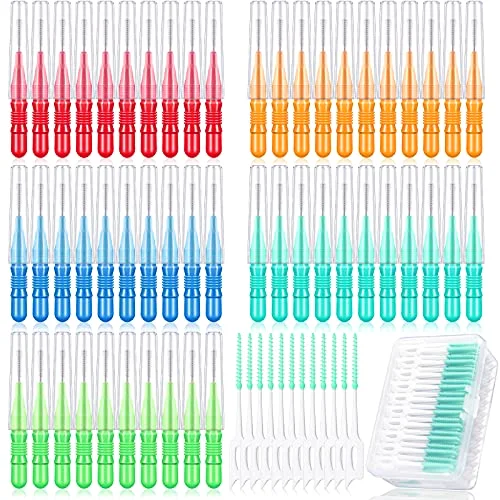
| Interdental brushes | 50 pieces | 350 pieces | Per piece falls by about two thirds |
| Favour tins | 12 pieces | 120 pieces | Per piece falls by roughly half |
| Ice pop bags | 200 pieces | 450 pieces | Per piece falls by about a third |
| Dish brushes | 2 pieces | 8 pieces | Per piece falls by about a quarter |
| Cocktail picks | 100 pieces | 1,000 pieces | Per piece falls steeply, then flattens |
That last row is the shape of the whole thing. The curve is steep at the start and flat at the end, which means most of the saving available to a household is captured well before the largest pack on the shelf.
The first jump in pack size gets you most of the money. The last jump gets you a storage problem.
The rule we use when setting a pack size
Where the saving actually comes from
It is worth being clear that a hundred of something does not cost a hundredth of what it costs to make one. Almost nothing about the object gets cheaper at volume; what gets cheaper is everything around it.
- Packing. One bag, one label, one carton for a hundred pieces rather than for ten.
- Handling. Every pack is picked, scanned and shipped once, whatever is inside it.
- Shipping. Weight matters, but a small dense pack of a hundred ships at close to the cost of a pack of ten.
- Your own time. This is the invisible one, and for a household it is often the largest: a pack of a hundred is one decision rather than ten.
The consequence is that the saving is largest on things that are small, light and cheap to make. That is precisely the shape of this catalogue, and it is not a coincidence.
Three questions before buying a hundred of anything
The per piece price is necessary and not sufficient. Three questions decide whether the cheaper per piece figure is real for you, and they take about ten seconds each.
- Will you use them before they go off? Anything with a shelf life has a hard ceiling on sensible pack size, and it is not a large one.
- Where will they live? A hundred of something small is invisible. A hundred of something bulky is a shelf you no longer have.
- Will you still want this one in two years? Generic beats specific for anything bought in quantity, because your taste changes and a plain white tin does not.
A yes to all three means the per piece figure is the whole story. A no to any of them means the cheaper number is a number on a page rather than a saving in your house.
Shelf life is the real limit, and it is shorter than people think
Storage is the constraint everyone worries about, and it is usually the wrong one. The genuine limit is that a surprising number of household consumables degrade in a cupboard.
Anything with adhesive is the clearest case. Stickers, labels, tapes and adhesive hooks lose grip over a few years in a warm cupboard, and the failure is silent until the moment you need one. Elastic is the same story: rubber bands bought in a box of five hundred will be brittle at the bottom of the box long before they are used up.
Plastics, metals and textiles are the opposite. A tin, a jar, a stainless tool or a cotton cloth bought in quantity is exactly as good in five years as it is today, and those are the categories where the largest packs make unambiguous sense.
| Kind of thing | Keeps | Sensible pack ceiling |
|---|---|---|
| Tins, jars, containers | Indefinitely | As large as you can store |
| Stainless and plastic tools | Indefinitely | As large as you will use |
| Cotton and microfibre cloths | Years | Large |
| Brushes with nylon bristles | Years unopened | A few years of use |
| Paper goods, napkins, plates | Years if dry | Large |
| Adhesives, stickers, tapes | Two to three years | What you will use in two years |
| Rubber bands and elastic | One to two years | Small, whatever the price |
Three cases where buying in bulk is the wrong answer
We sell multipacks and we would rather say this plainly than have somebody discover it after buying one.
The first case is anything dated, named or themed. A banner with a year on it, tableware in a specific colour scheme, a favour with a couple's initials. Buy those to the count, because the surplus has no second occasion.
The second is anything you have not tried. The per piece price on a hundred is irrelevant if the item turns out to be the wrong size, the wrong grip or the wrong colour. Buy the smallest pack once, then buy the large one.
The third is anything bulky relative to its value. A hundred of something the size of a fist is a cubic foot of cupboard, and cupboard space in most homes is worth more per cubic foot than the contents.
The caution that belongs in this piece
A catalogue built on multipacks of small objects carries an obvious hazard, and a piece encouraging people to buy a hundred of something ought to say so rather than leave it to a footnote elsewhere.
The practical consequence for a household buying in quantity is straightforward. A box of five hundred small items is harder to keep track of than a packet of ten, and a surplus that lives in a low cupboard is a surplus a small child can reach. Store the quantity, not the open packet.
What a household actually gets through in a year
The abstract version of this argument is easy to nod along to and hard to act on. The concrete version is a list, and the list is shorter than most people expect.
A household of two or three, cooking most evenings and cleaning normally, gets through roughly the following in twelve months. The figures come from what people reorder rather than from what we would like them to reorder, and the last column is the one that decides whether a large pack is worth it.
| Item | Per year | Buying pattern | Worth a large pack |
|---|---|---|---|
| Dish brushes or scrubbers | 6 to 9 | Replaced when splayed, always late | Yes |
| Kitchen sponges | 20 to 30 | Replaced weekly if done properly | Yes |
| Cleaning cloths | 10 to 15 | Wear out and get demoted to rags | Yes |
| Interdental brushes, per person | 50 | Weekly, as intended | Yes |
| Small storage tins or jars | 10 to 40 | Bursty: nothing for months, then a project | Yes |
| Napkins and paper goods | Two or three events | Bursty, driven by dates | Yes |
| Rubber bands, adhesive items | A handful | Degrade before they run out | No |
| Themed party items | One occasion | Never repeats | No |
Read down the last column and the shape of a sensible household order appears on its own. Six of the eight rows are things where a year is a large number and the item does not deteriorate, and those are exactly the rows where the per piece price is worth chasing.
The other two rows are the interesting ones, because they are where good advice reverses. Adhesives and elastic degrade in a cupboard, so the correct quantity is what you will get through in a couple of years regardless of price. Themed items have no second occasion, so the correct quantity is exactly the count.
Storing a large pack so it stays useful
The failure people expect from bulk buying is running out of space. The failure that actually happens is forgetting what you own, and it has a simple cause: the surplus goes somewhere different from the working stock.
- Keep the working few where they are used and the rest together in one place, rather than distributing the surplus around the house.
- Decant into something you can see into. A hundred small items in an opaque box is a hundred items you will buy again.
- Write the date on the outer packaging of anything with a shelf life. Adhesives and elastic give no warning as they fail.
- Store small items high rather than low if there are young children in the house, for the reason set out in the next section.
How we decide what goes in a pack
Since this whole piece is about pack size, it is only fair to say how ours are arrived at. The rule is that a pack should hold roughly what one household or one occasion gets through within the natural life of the thing.
An interdental brush is meant to be replaced weekly, so a year is about fifty and a family is a multiple of that. A dish brush splays in about six weeks, so a year is eight or nine. A favour is one per guest, so the pack sizes follow guest counts rather than time. Napkins and cups have no life at all and are limited only by storage.
Where that rule gives a number nobody would buy, we make two sizes rather than one compromise. That is why several lines in personal care exist in both a fifty and a three hundred and fifty, and the per piece difference between them is printed on both pages.
The arithmetic in one line
Divide the price by the number in the pack. Compare that. Then ask whether you will use them before they perish, whether you have somewhere to put them, and whether you will still want this exact one in two years.
Three yeses and the cheaper per piece figure is a real saving. One no and it is arithmetic that does not apply to you, which is worth knowing before rather than after.
How this plays out for an event with a fixed guest list is in How much of everything a party actually needs, and how it plays out for a making project, where the quantity is set by waste rather than by people, is in How much material a making project actually eats. Every product page on Patelai carries both numbers.